
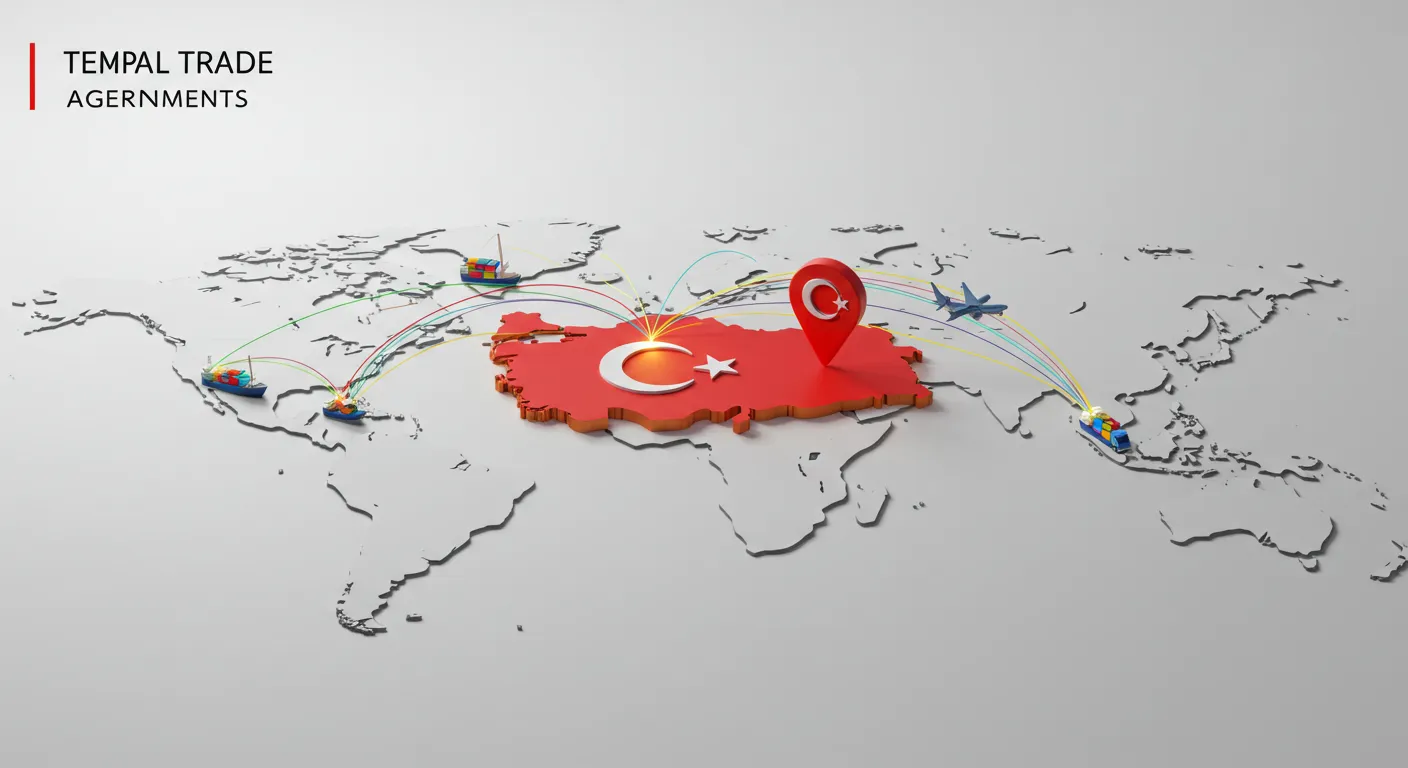
Sourcing BMW OEM Parts from Turkey: Price-Quality Balance and Global Logistics Advantages
Introduction
The automotive industry is one of the largest industrial sectors in the world. Competition is not limited to production alone but also includes supply chain efficiency and logistical superiority. In this context, Turkey is increasingly emerging as a key hub for sourcing BMW OEM parts (original equipment manufacturer-approved components).
Thanks to its strong price/quality balance and the facilitation provided by international trade agreements, Turkey has become a strategic base for automotive exports to global markets.
Turkey’s Strength in Automotive Exports
In 2024, Turkey’s total automotive exports reached approximately USD 35.4 billion.
80% of exports were directed to European Union countries.
More than 1,400 supplier companies in Turkey directly provide parts to OEM production chains.
Turkish automotive parts are exported to over 90 countries worldwide.
These figures show that Turkey is not only a manufacturing base but also a strong player in accessing global markets.
Why Source BMW OEM Parts from Turkey?
1. Price / Quality Balance
One of the greatest advantages of sourcing BMW OEM parts from Turkey is the optimal balance between price and quality. Compared to German production, Turkish-made parts are 20–30% cheaper, offering a significant cost advantage. On the other hand, when compared with Chinese products, Turkish parts provide up to 40% higher quality and durability. This is mainly because factories in Turkey are OEM-certified and operate according to international standards, ensuring that parts are fully compatible with original specifications. This combination results in the best solution in terms of both quality and cost.
2. Strategic Geographical Position
Turkey is located at the crossroads of Europe, Asia, and Africa, making it a central hub for logistics and supply.
Road transport from Istanbul to Germany takes only 3–4 days.
Air freight to Dubai takes just 1 day.
Sea shipments from Turkey to North African ports are completed in 5–7 days.
This advantageous location provides fast and flexible logistics infrastructure, making Turkey an ideal export base for BMW OEM parts.
3. Flexible and Reliable Production
Turkish manufacturers can accommodate both small-scale orders and large-volume production. Furthermore, production and quality control processes comply with international standards such as ISO/TS 16949, ensuring consistent quality and reliability.
Turkey’s International Trade Agreements
One of Turkey’s greatest export strengths lies in its customs union and free trade agreements, which make it easier for Turkish-made BMW OEM parts to reach different continents under advantageous conditions:
European Union (EU): Exports from Turkey to EU countries are duty-free.
North Africa (Egypt, Morocco, Tunisia, Algeria): Customs duties are low, between 0–5%, thanks to free trade agreements.
Wider Africa: Growing demand in Sub-Saharan Africa, particularly in South Africa and Nigeria, represents a high-potential market.
North America (USA, Canada, Mexico): Strong logistics networks (DHL, UPS, FedEx) enable deliveries within 7–10 days.
South America (Chile, Colombia): Benefiting from free trade agreements for smoother access.
Asia (GCC countries, Azerbaijan, Central Asia): Demand for Turkish automotive products is growing each year, especially in BMW spare parts.
Australia: Turkish OEM parts labeled “OEM Approved” are rapidly gaining market share.
As a result, Turkey serves not only Europe but also Africa, the Americas, Asia, and Australia, strengthening its role as a global automotive supply hub.
Statistical Comparison: Turkey vs Competitors
When comparing market players, Turkey stands out as the most balanced option in terms of price and quality:
German products: High prices, 10/10 quality, delivery within 3–5 days, low risk.
Chinese products: Low prices, only 6/10 quality, delivery within 25–35 days, medium-to-high risk.
Turkish products: Medium prices, 9/10 quality, delivery within 3–7 days, low risk.
This proves that Turkey provides the ideal balance between affordability and high-quality standards for BMW OEM parts.
Logistics Models for Exporting BMW OEM Parts from Turkey
Small Orders (Express Shipping)
Delivered to Europe in 3–5 days via DHL, UPS, or FedEx.
Most suitable for aftermarket and B2C sales.
Large Orders (Container – Sea Freight)
5–7 days to Europe.
25–30 days to the Americas.
Ideal for wholesale distributors.
Hybrid Models (Air + Road)
Most efficient for Gulf countries.
Conclusion
With its competitive prices and high-quality standards, Turkey has become a globally preferred hub for BMW OEM parts sourcing. Supported by international trade agreements, strong logistics networks, and a strategic geographical position, BMW parts exported from Turkey reach not only Europe but also North Africa, the Americas, Asia, and Australia with ease.
In short: sourcing BMW OEM parts from Turkey is the smartest choice for achieving the perfect price-quality balance.
Do you also want me to prepare the Spanish and Russian versions of this full article to complete your multilingual pack?